


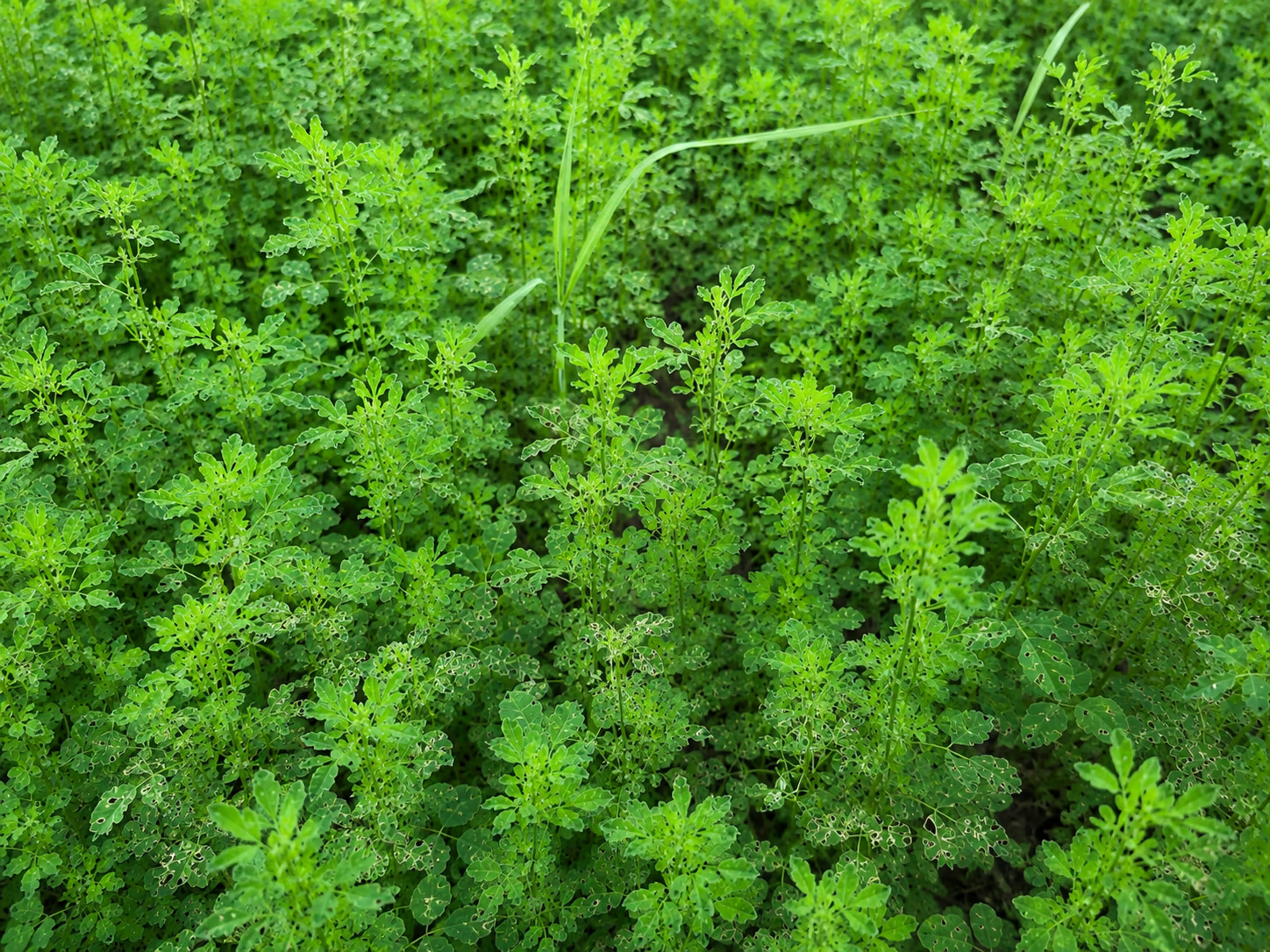
Phytonomus on Alfalfa: Protection with Prestige
Phytonomus on Alfalfa: How to Identify the Pest and Protect the Crop
Phytonomus is one of the most dangerous pests of alfalfa, especially during the period of active spring growth. Its larvae damage young leaves, shoot tips, and buds, causing plants to lose green mass, regrow more poorly after mowing, and produce lower-quality forage. In scientific and agronomic literature, Phytonomus is described as a serious pest of forage and seed alfalfa in Uzbekistan, capable of sharply reducing the yield of the most valuable first cutting.
What Phytonomus Damage Looks Like
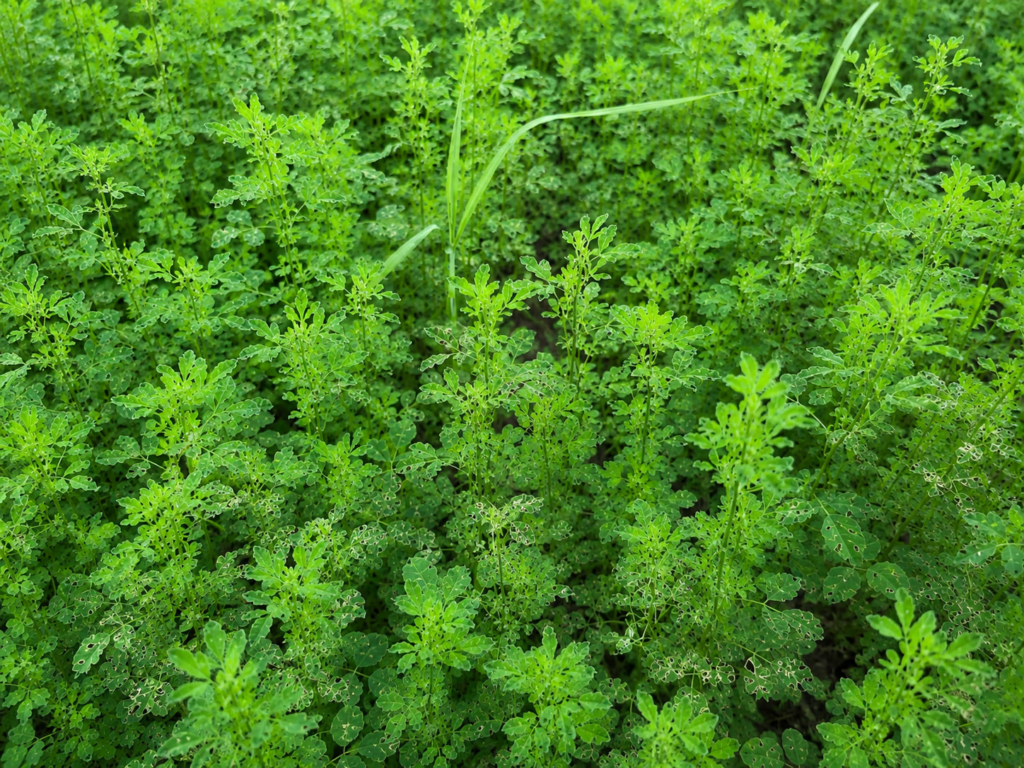
The main sign of Phytonomus damage is “skeletonized” alfalfa leaves, as if the leaf blade has been eaten away while the veins remain. At an early stage, the damage appears as small holes and pale areas on young leaves. However, when the pest develops heavily, the shoot tips turn gray, dry out, and the field may look as if it has been damaged by frost.
This description of damage is consistent with data from agricultural services: larvae first feed inside the growing tips and folded leaves, and then openly damage leaves and inflorescences.
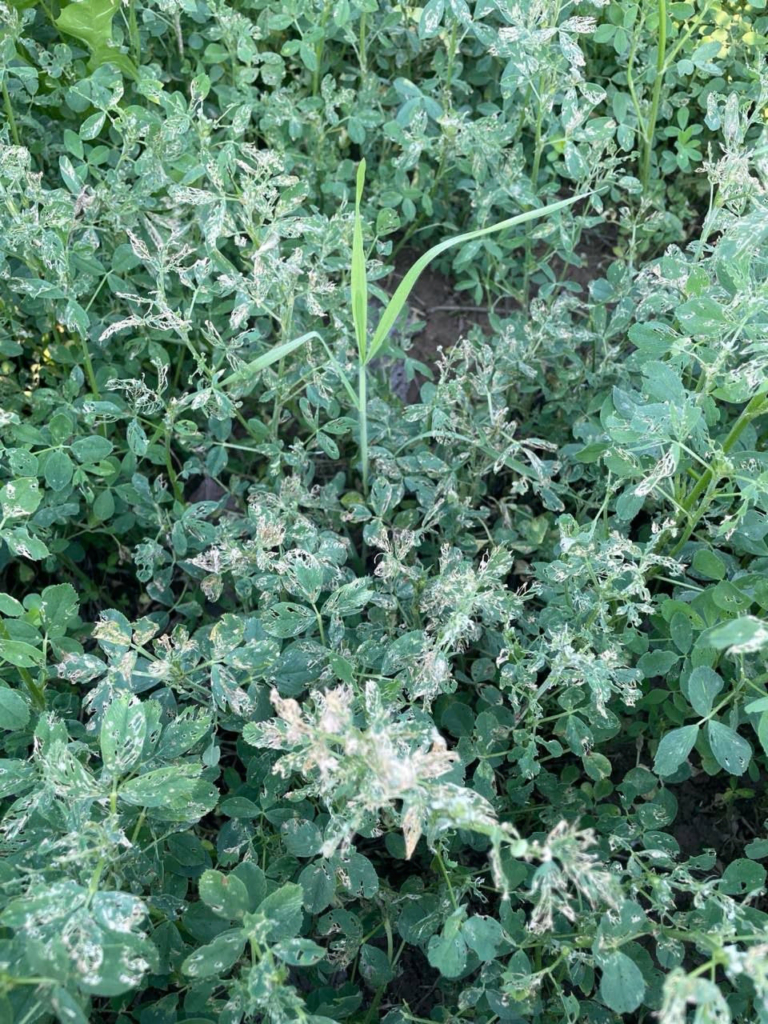
The photo shows typical severe damage: alfalfa leaves have lost their green mass, and the shoot tips have become pale and net-like. This is dangerous not only because of the field’s appearance. In alfalfa, the main feed value is concentrated in the leaves, so the loss of leaf mass reduces both yield and hay quality.
Why Phytonomus Damages Alfalfa So Quickly
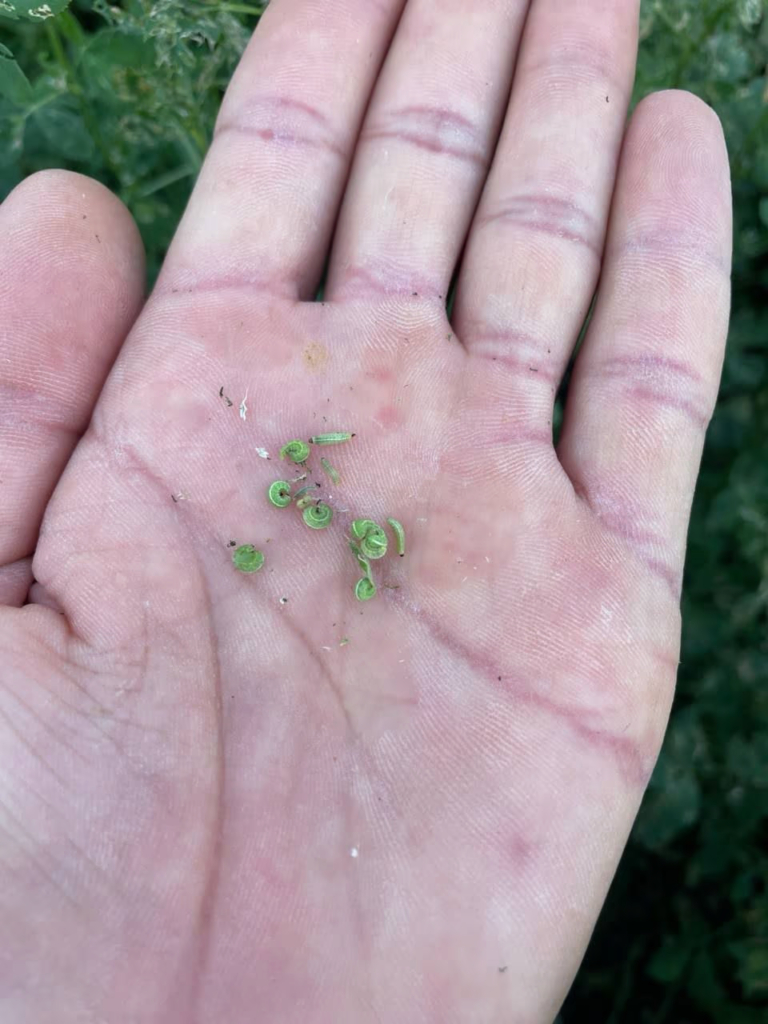
The greatest damage is caused by Phytonomus larvae because they feed on the young, tender tissues of the plant. Adult beetles can also damage leaves, but economically significant damage is more often associated with larvae. They gnaw young buds, leaves, flower buds, and shoot tips.
According to descriptions from Rosselkhozcenter, the larvae feed for 15–22 days, and females are able to lay eggs inside the stems. Because of this, larvae of different ages may be present in the field at the same time.
The shorter the alfalfa and the younger the shoots, the more dangerous the damage. If the peak number of larvae coincides with the early growth stage, even a small number of pests can cause severe defoliation. University of Delaware recommendations note that when alfalfa is less than 12 inches tall, even fewer than 2 larvae per stem can lead to severe feeding damage.
Possible Yield Losses Caused by Phytonomus
With severe infestation, Phytonomus can take away tens of percent of alfalfa yield. According to Colorado State University, at high pest density, biomass losses can reach about 30–40%. Materials on alfalfa protection in Uzbekistan state that during mass reproduction of Phytonomus, fields may lose around 65% of the crop. The first cutting is especially vulnerable!
Approximate damage scale for field assessment:
Slight infestation 🟢
Single holes are visible, individual shoot tips are damaged.
Possible losses: up to 5–10%.
Moderate infestation 🟡
Damage is visible on many plants, leaves are partially “net-like”.
Possible losses: 10–25%.
Severe infestation 🟠
Shoot tips become pale, leaves are skeletonized, plant growth is suppressed.
Possible losses: 30–40%.
Mass infestation 🔴
The field turns grayish, shoot tips dry out, regrowth is weak.
Possible losses: from 65% and higher.
Under dry conditions, damage from Phytonomus can be even stronger. NDSU Extension states that under unfavorable conditions and heavy infestation, losses from alfalfa weevil may approach 100%, especially during drought. For Uzbekistan, this is especially important to consider in fields where alfalfa also suffers from heat, lack of moisture, or soil salinity.
When to Start Treatment
Treatment against Phytonomus should be carried out not when the field has already “turned gray,” but at the first signs of fresh damage. Young larvae are usually more vulnerable, and alfalfa recovers faster if protection is applied before mass leaf feeding occurs.
Therefore, fields should be inspected at the beginning of spring vegetation, especially when plants are just gaining height and the pest is actively feeding in the shoot tips.
If fresh holes, skeletonized leaves, and live green larvae are already visible on alfalfa, treatment should not be delayed. In severe infestation, the plant loses not only the current cutting but also the strength needed for further regrowth after mowing.
Anguzal Agroservis Protection Scheme: Prestige Against Phytonomus
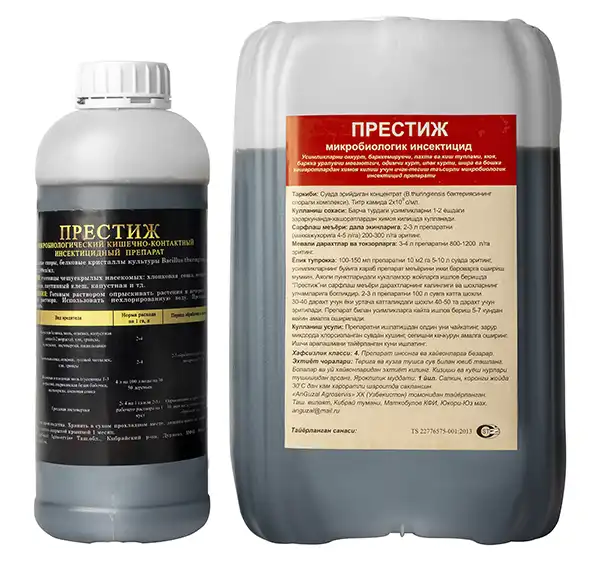
The main product in the alfalfa protection scheme against Phytonomus is Prestige, applied at a rate of 1–3 l/ha. The rate is selected depending on the degree of infestation, plant height, and the number of live larvae in the field.
At the first signs of damage, when there are few larvae and alfalfa is actively growing — 2 l/ha.
With moderate infestation, when there is a lot of fresh damage on the shoot tips — 2.5 l/ha.
With severe infestation, when there are many larvae, the leaves are skeletonized, and the plants are short or weakened — 3 l/ha.
Treatment frequency: 1–3 times during the harmful period. Repeated treatment is carried out based on field inspection. If live larvae remain after several days and new fresh damage appears, protection should be repeated.
With slight infestation, one treatment is often enough. If larval emergence is prolonged, 2–3 treatments may be needed.
How to Strengthen Alfalfa Recovery After Damage
After Phytonomus damage, alfalfa needs not only pest protection but also support for recovery. When leaf mass is damaged, the plant loses part of its photosynthetic capacity, accumulates nutrients more poorly, and regrows more slowly after stress.
To support immunity and recovery, it is recommended to add the following products to the spraying scheme:
| Product | Rate |
|---|---|
| Plantastim | 1–2 l/ha |
| Fosfomax | 1–2 l/ha |
| Baktomin | 1–2 l/ha |
Plantastim, Fosfomax, and Baktomin help alfalfa recover from stress more quickly and support active growth. This scheme is especially useful if the plants have already been weakened by the pest, heat, salinity, nutrient deficiency, or poor regrowth after mowing.
Recommended frequency of the recovery scheme: 1–3 foliar spray treatments. The number of treatments depends on the condition of the field. With light damage, one support treatment is enough. Under severe stress, the treatment can be repeated.
Recommended Treatment Scheme
When Phytonomus is detected on alfalfa, use a comprehensive approach: first stop the pest, then help the plant recover.
Working scheme per 1 hectare:
Prestige — 1–2 l/ha
Plantastim — 2 l/ha
Fosfomax — 2 l/ha
Baktomin — 2 l/ha
Treatment is best carried out in the morning or evening, ensuring even coverage of the plants with the working solution. If the alfalfa is tall and dense, it is important to choose a water volume that allows the solution to reach not only the tops but also the inside of the crop canopy.
Why It Is Important Not to Wait for Severe Damage
Phytonomus is dangerous because visible damage appears after the larvae have already started actively feeding. While the damage is still minor, alfalfa is still able to recover quickly. But if the shoot tips are already heavily eaten, the leaves have dried out, and the field has turned grayish, part of the yield has already been lost.
Early treatment with Prestige helps preserve the first cutting and reduce stress on the plant. Adding Plantastim, Fosfomax, and Baktomin supports alfalfa recovery after stress and helps preserve the potential of the following cuttings.
Brief Conclusion
If green larvae, skeletonized leaves, and drying shoot tips appear on alfalfa, this is a signal for urgent treatment against Phytonomus.
🌱 With slight infestation, use Prestige at 1–2 l/ha.
🍀 With moderate infestation, use 2.5 l/ha.
🌻 With severe infestation, use 3 l/ha.
For plant recovery, add Plantastim, Fosfomax, and Baktomin at 1 l/ha each as a foliar spray.
Treatment frequency: 1–3 times, depending on the degree of infestation and the repeated appearance of the pest.
FAQ
What is Phytonomus on alfalfa?
Phytonomus is the alfalfa weevil, whose larvae damage alfalfa leaves, shoot tips, and buds. With heavy infestation, plants lose leaf mass, the field takes on a grayish appearance, and the yield of hay and seeds drops sharply.
Why are Phytonomus larvae dangerous?
Phytonomus larvae are dangerous because they feed on young alfalfa shoot tips and leaves. They skeletonize the leaves, reduce photosynthesis, worsen forage quality, and can significantly reduce the yield of the first cutting.
What yield losses can Phytonomus cause?
At high numbers, Phytonomus can reduce alfalfa yield by 30–40%, and during mass reproduction — by up to 60–65% or more. Losses depend on plant height, growth stage, moisture, drought conditions, and larval density.
What should alfalfa be treated with against Phytonomus?
For treating alfalfa against Phytonomus, Prestige is recommended at a rate of 1–2 l/ha. With slight infestation, use 1 l/ha; with moderate infestation — 1.5 l/ha; with severe infestation — 2 l/ha.
What should be added to help alfalfa recover?
To help alfalfa recover after Phytonomus damage, Plantastim, Fosfomax, and Baktomin can be added at 1 l/ha each. These products help support growth, nutrition, and plant stress resistance after damage.
More information about how Prestige works can be found in the article “Caterpillars on Plants: Saving the Crop with Prestige Insecticide.”
For additional information, please contact our Telegram group.
