


Rust on Wheat
Rust on wheat is one of the most common diseases that threaten crops in the climatic conditions of Uzbekistan. Using proper agronomic measures, biological protection methods, and growth stimulators not only helps to maintain plant health but also increases their resistance to stress and pathogens. Plantastim and Sporagin have proven their effectiveness in fighting rust and are widely used by farmers to protect their crops.
Types of Rust in Uzbekistan's Conditions
The following types of rust are most commonly found on wheat in Uzbekistan:
- Brown Rust (Leaf Rust)
- The most common type of rust in Uzbekistan.
- It appears in spring when night temperatures range between 10–15°C, and high humidity is caused by morning dew.
- Visible as brownish spots on the leaves that gradually merge and cause them to dry out.
- Yellow Rust (Stripe Rust)
- Mainly develops during the early stages of vegetation at cooler temperatures (8–12°C).
- It is visually identified by yellow stripes along the leaf veins.
- It can cause significant crop losses if no timely measures are taken.
- Stem Rust (Black Rust)
- Less common but can lead to severe stem damage and lodging, especially in dense crops.
Climatic Conditions and Rust Development
In Uzbekistan, the spread of rust is favored by:
- Sharp temperature fluctuations in spring and early summer.
- High humidity at night and early morning (dew), followed by dry daytime conditions.
- Dense sowing and insufficient air circulation between plants.
Rust develops most actively in spring and early summer, so it is crucial to regularly monitor the condition of crops during these periods.

Signs and Dangers of Rust
Key symptoms:
- The appearance of brown, yellow, or black pustules on leaves, stems, and ears of wheat.
- Drying and premature death of leaves.
- Weakening of plants, reduced yield, and deterioration of grain quality.
Without timely intervention, rust can cause significant crop losses, especially in Uzbekistan, where sharp temperature changes and high night humidity are common in spring.
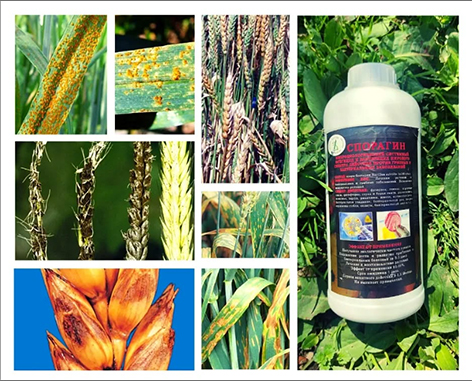
Application Scheme of Biological Products by AnGuzal Agroservis
- Sporagin – Biofungicide
Sporagin, based on the bacterium Bacillus subtilis, effectively suppresses pathogenic microorganisms, including rust pathogens, and strengthens plant immunity.
- Seed Treatment Before Sowing
- Dosage: 2 L/t
- Method: Evenly treat seeds before sowing to protect seedlings from early infections and stimulate growth.
- Vegetation Period Treatment
- Dosage: 2–4 L/ha
- Frequency: Three times per season:
- First application during tillering to prevent disease development.
- Second application during stem elongation, when the risk of infection is particularly high.
- Third application before flowering to protect plants during the critical period and maintain grain health.
Benefits of Sporagin:
- Effectively suppresses rust and other fungal diseases.
- Promotes the recovery of affected plant tissues.
- Increases resistance to stress (heat, humidity fluctuations).
- Plantastim – Biological Growth Stimulator and Fungicide
Plantastim, based on the fungus Trichoderma lignorum, not only protects plants from diseases but also stimulates their growth and development, enhancing resistance to adverse conditions.
- Vegetation Period Treatment
- Dosage: 2–4 L/ha
- Application phases:
- During stem elongation to strengthen plants and increase resistance to diseases.
- Before flowering to stimulate grain formation and protect against rust and other pathogens.
Results of Plantastim Application:
- Reduced risk of rust infection.
- Improved yield due to strengthened plant immunity.
- Enhanced grain structure and quality.
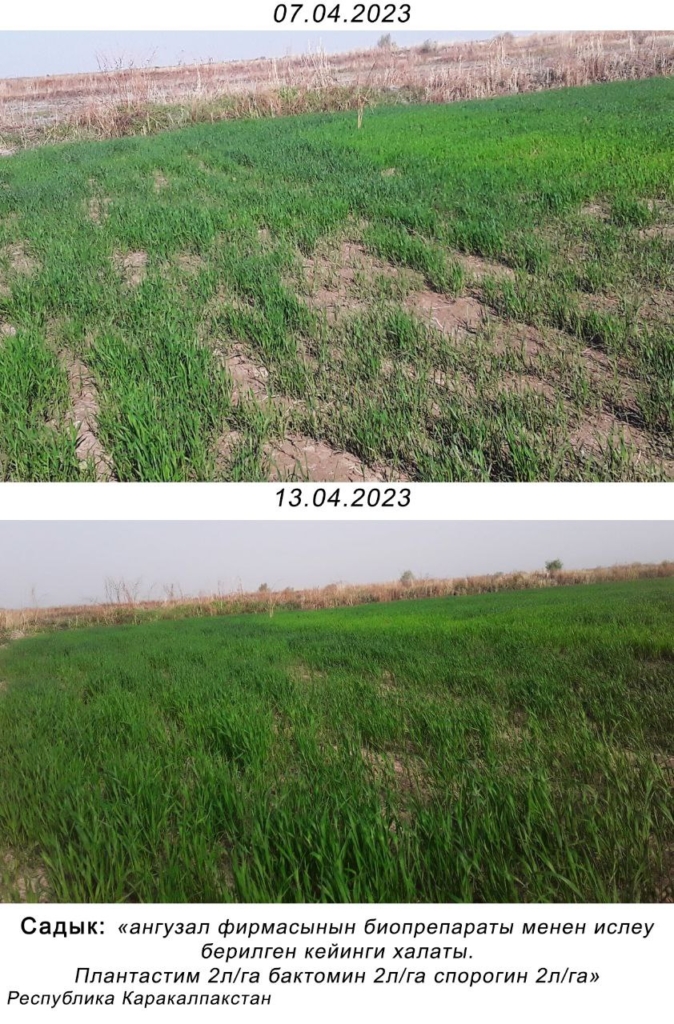
Agronomic Preventive Measures
- Choose Resistant Varieties
- Use wheat varieties adapted to Uzbekistan's climate and resistant to rust.
- Crop Rotation
- Avoid planting wheat in the same field for consecutive years.
- Alternate cereals with legumes (peas, chickpeas) to reduce soil-borne pathogens.
- Adjust Sowing Density
- Avoid dense sowing to ensure air circulation and reduce moisture in the root zone.
- Balanced Fertilization and Plant Nutrition
- Use balanced fertilizers, especially potassium and phosphorus, to increase plant disease resistance.
- Apply biological products such as Bactomin (2 L/ha) and Phosphomax (2 L/ha) to improve nutrient uptake from the soil and enhance yields.
- Remove Crop Residues
- After harvest, remove crop residues to eliminate infection sources.
- Preventive Treatments
- Regularly treat crops with Sporagin and Plantastim as a preventive measure.
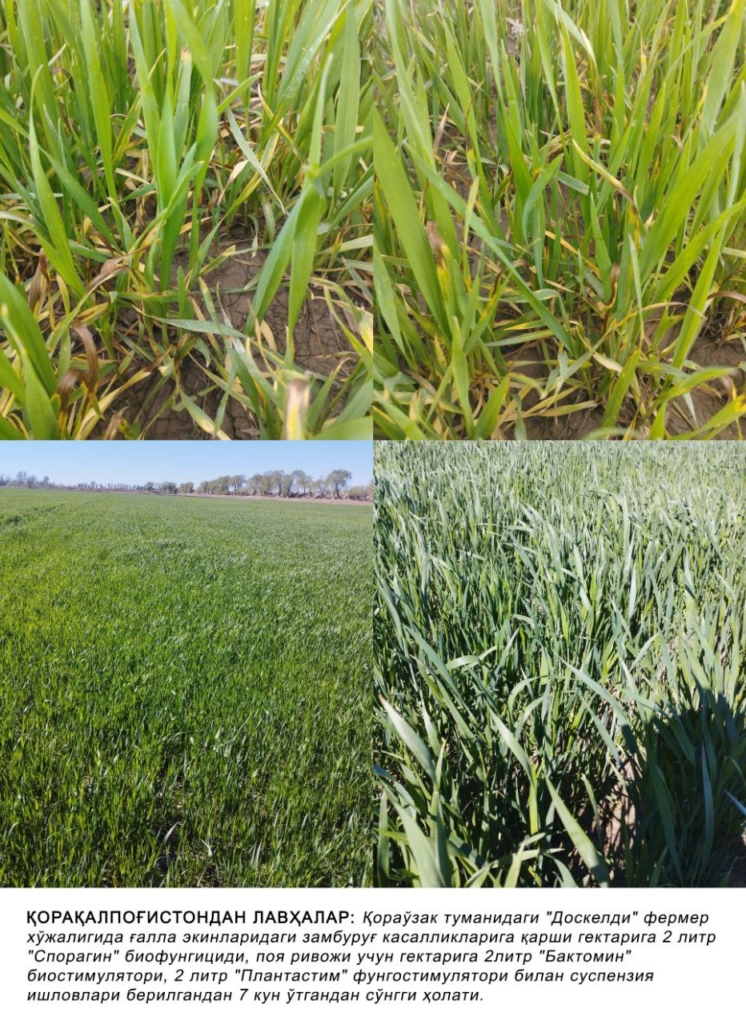
Conclusion
Biological protection of wheat using Plantastim and Sporagin is a reliable solution for farmers in Uzbekistan. These products provide comprehensive plant protection, improve resistance to rust, and increase yields. Following the recommended treatment scheme helps minimize infection risk, maintain crop health, and produce high-quality grain.
