


Aphids on Plants: How to Identify, Prevent, and Protect Gardens, Vegetables, and Ornamental Crops
Aphids are among the most common and harmful pests found on ornamental plants, fruit orchards, and vegetable crops. They reproduce quickly, suck sap from young shoots, weaken plants, and may transmit viral diseases.
Aphids are especially common on roses, apple trees, apricots, pears, sweet cherries, peppers, cucumbers, tomatoes, eggplants, cabbage, leafy greens, and seedlings. In protected cultivation — greenhouses and tunnels — the problem can develop even faster, because warm temperatures, high humidity, and tender young plants create favorable conditions for the pest.
Aphid control should not begin only when the plant is already covered with colonies. It is much more effective to act in advance through prevention, regular monitoring, and a well-planned biological protection system.
Why Aphids Are Dangerous for Plants
At first glance, aphids may seem like small and not very serious pests. However, their danger lies in the fact that they work quickly and in large numbers.
Aphids feed on plant sap and most often settle on:
- young shoots;
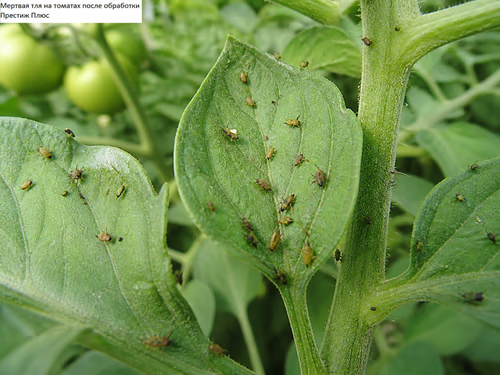
- the underside of leaves;
- buds;
- growing tips;
- young ovaries;
- tender new growth after pruning or fertilization.
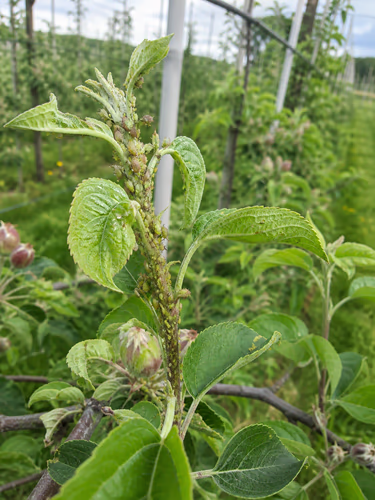
As a result, leaves curl, shoots become deformed, buds open poorly, plant growth slows down, and the crop becomes more vulnerable to diseases.
Another problem is the sticky secretion produced by aphids, known as honeydew. Sooty mold often develops on it. Leaves become dirty, photosynthesis worsens, and the plant looks weak and unhealthy.
Main Signs of Aphid Infestation
Aphids are not always easy to notice immediately, especially at an early stage. That is why plants should be inspected regularly, especially in spring and early summer.
Main signs of infestation:
- curled or wrinkled young leaves;
- sticky coating on leaves and shoots;
- clusters of small insects on growing tips;
- deformation of buds and young shoots;
- ants appearing on the plant;
- slowed growth;
- weakened flowering and fruit set.
Ants are often an indirect sign of aphids. They feed on the sweet secretions produced by aphids and may “protect” aphid colonies, helping the pest spread across the plant.
Aphids on Ornamental Plants and Roses
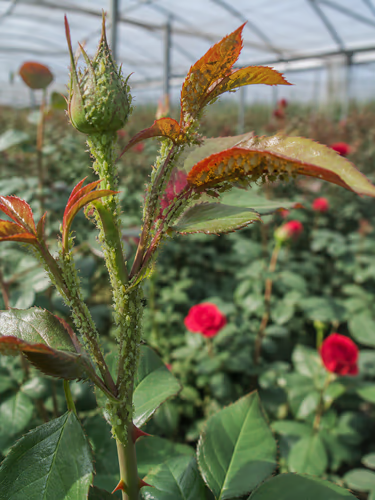
Roses are one of the favorite host plants for aphids. The pest most often appears on young shoots, buds, and tender leaves. If measures are not taken in time, buds may become deformed, fail to open properly, or dry out.
On ornamental plants, aphids are dangerous not only because they weaken the plant, but also because they spoil its appearance. This is especially important for roses, chrysanthemums, hibiscus, indoor plants, and ornamental garden crops, where decorative value is the main purpose.
For roses and ornamental plants, preventive treatments are important before aphids multiply heavily, especially during active growth and budding.
Aphids in Intensive Orchards: Apple Trees and Other Fruit Crops
In intensive orchards, aphids can cause serious economic damage. Young apple trees, seedlings, and actively growing trees are especially sensitive.
On apple trees, aphids damage young leaves and shoots. This disrupts crown formation, weakens growth, and reduces the quality of the future harvest. With severe infestation, leaves curl, shoots bend, and the tree becomes less resistant to stress conditions.
In orchards, it is important not to wait for mass infestation. Prevention should begin with early monitoring: inspecting young shoots, the underside of leaves, and new growth after pruning.
Aphid control is especially important in intensive orchards, where trees are planted densely and the pest can quickly spread from one tree to another.
Aphids on Open-Field and Greenhouse Vegetables
Aphids are very common on vegetable crops. The most vulnerable crops include:
- cucumbers;
- tomatoes;
- peppers;
- eggplants;
- cabbage;
- zucchini;
- leafy greens;
- seedlings.
In open fields, aphids spread actively in warm weather, especially when weeds and ants are present. In greenhouses, the situation can be even more difficult: the pest reproduces quickly, while plants remain in continuous vegetation.
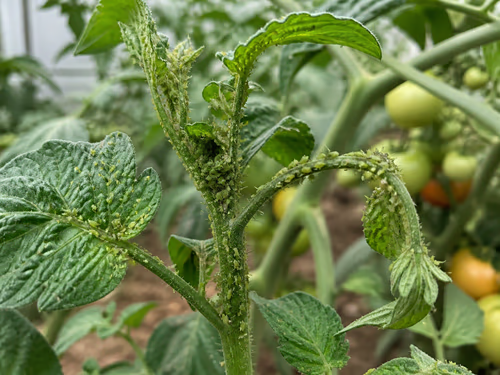
On cucumbers and peppers, aphids often settle on the underside of leaves. Leaves begin to curl, plants weaken, ovaries may drop, and yield decreases.
In protected cultivation, prevention, sanitation, regular monitoring, and alternating biological protection methods are especially important.
Why Prevention Is More Important Than Fighting Aphids “After the Fact”
Aphids reproduce very quickly. If they are noticed too late, treatment becomes more difficult: colonies are already large, leaves are curled, and some pests are hidden inside deformed shoots.
That is why the best strategy is not to wait for severe infestation, but to build a protection system:
- inspect plants regularly;
- remove weeds;
- control ants;
- avoid overfeeding plants with nitrogen;
- keep plants in good physiological condition;
- carry out preventive treatments with biological products.
A strong plant tolerates stress better, recovers faster, and suffers less from pests and diseases.
Biological Protection Against Aphids with Prestige Plus
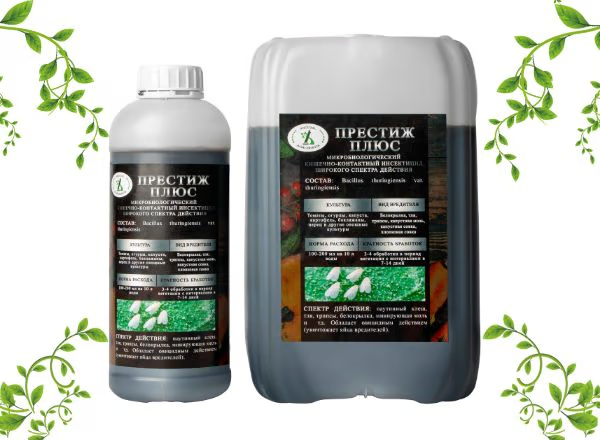
To protect plants from aphids, the biological product Prestige Plus can be used.
Prestige Plus is applied against pests, including aphids, and helps reduce pest populations on plants. It can be used as part of a protection system for ornamental crops, fruit orchards, and vegetables grown in open fields and greenhouses.
Prestige Plus is especially relevant:
- at the first signs of aphids;
- for preventive treatments during active growth;
- on young shoots and leaves;
- in orchards after inspecting new growth;
- in greenhouses during regular pest monitoring.
It is important to apply the treatment thoroughly, covering not only the upper surface of the leaves but also the underside, because aphids often form colonies there.
Prestige Plus application rate:
Spray at a rate of 200 ml per 10 liters of water.
Additional Plant Protection: Sporagin and Laviron
Aphids are dangerous not only as sap-sucking pests. Weakened plants become more susceptible to diseases, and some aphid species may participate in the spread of viral infections.
That is why a comprehensive approach is important in the protection system.
Sporagin — Prevention of Bacterial and Fungal Diseases
Sporagin is a biofungicide based on Bacillus subtilis. It is used to prevent and reduce the risk of bacterial and fungal diseases.
After aphid damage, plants may become weakened, and their tissues may become more vulnerable to infections. Therefore, Sporagin is a good addition to an overall protection program, especially if the plants are already under stress.
Recommended foliar application rate: 100–200 ml per 10 liters of water, depending on the level of infestation and plant condition.
Laviron — Prevention of Viral Diseases
Laviron is used in plant viral disease prevention programs. This is especially important for crops that often suffer from viruses: tomatoes, peppers, cucumbers, eggplants, and other vegetables.
Since aphids may be associated with the spread of viral infections, preventive use of Laviron helps strengthen the plant protection system.
Recommended application rate: 10–30 ml per 10 liters of water, depending on the level of risk and plant condition.
Example of a Comprehensive Protection Program
For ornamental plants, roses, vegetables, and orchard crops, a comprehensive approach can be used.
1. At the First Signs of Aphids
Apply Prestige Plus as a foliar treatment, making sure to thoroughly cover the underside of leaves and young shoots.
2. For Disease Prevention After Stress
Add Sporagin to the treatment program to help protect plants from bacterial and fungal diseases.
3. For the Prevention of Viral Infections
Use Laviron, especially on vegetable crops and in greenhouses, where the risk of infection spread is higher.
4. Re-Inspection
A few days after treatment, inspect the plants again: check whether live aphid colonies remain, whether new curled leaves have appeared, and whether ants or sticky deposits are still present.
5. Repeat Treatment
In case of severe infestation, it is recommended to repeat the treatment after 5–7 days.
Aphid Prevention Without Chemical Load
Biological protection is especially relevant for farms that aim to reduce chemical load, grow safer products, and support the health of the agroecosystem.
For aphid prevention, it is important to:
- prevent weed overgrowth;
- remove severely infested plant parts;
- control ants;
- avoid excessive nitrogen fertilization;
- ventilate greenhouses;
- avoid overly dense planting;
- inspect plants regularly;
- carry out preventive treatments with biological products.
Plants should be monitored especially carefully after sudden warming, rainfall, active green mass growth, and nitrogen fertilization.
When to Start Treatments
The best time for treatment is the early stage of pest appearance, when aphid colonies are still small.
Do not wait until aphids completely cover the shoots. The earlier protection begins, the easier it is to keep the plant healthy and reduce pest spread.
On roses and ornamental plants, treatments should begin when the first colonies appear on buds and young shoots.
In orchards, treatment should be based on inspection of young growth and the underside of leaves.
In greenhouses, treatments should begin at the first signs of the pest or preventively if aphids have appeared there before.
Conclusion: Aphid Protection Should Be Systematic
Aphids are not just small pests on leaves. They weaken plants, reduce growth, lower yield, and may increase the risk of disease spread.
For effective protection, it is important to combine prevention, regular monitoring, and the use of biological products.
Prestige Plus helps fight aphids and other pests.
Sporagin supports plant protection against bacterial and fungal diseases.
Laviron is used for the prevention of viral infections.
A comprehensive approach helps protect ornamental plants, roses, apple orchards, and open-field and greenhouse vegetables without unnecessary chemical load and with care for plant health.
More information about the use of the products is available in our Telegram channel.
